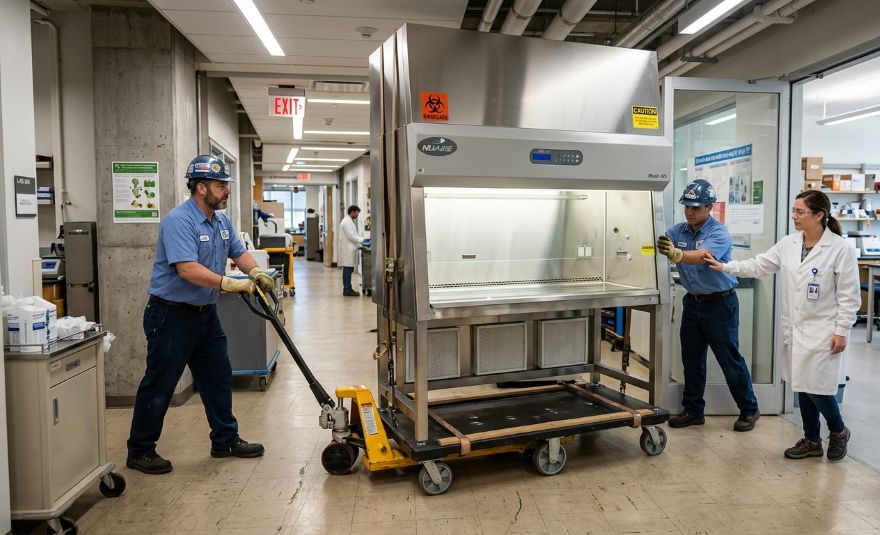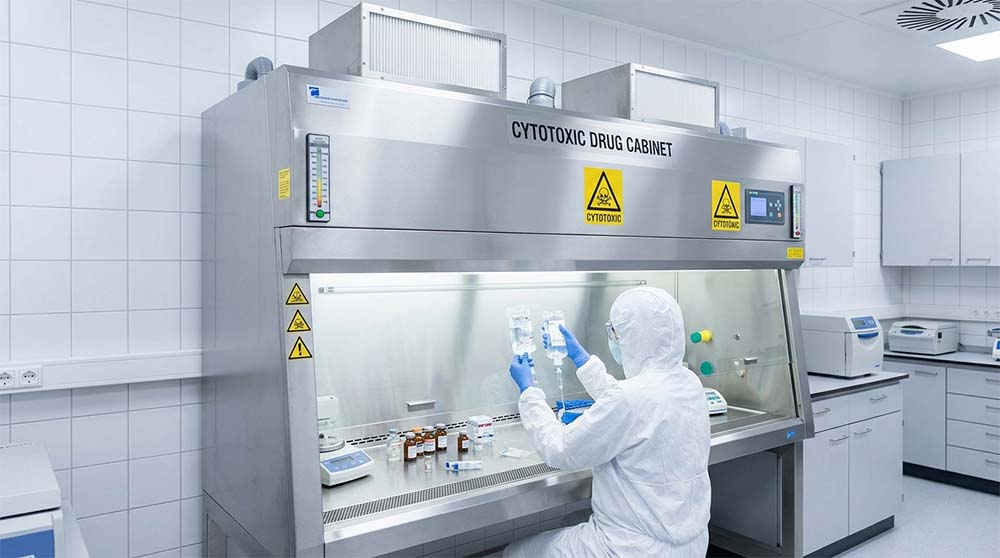








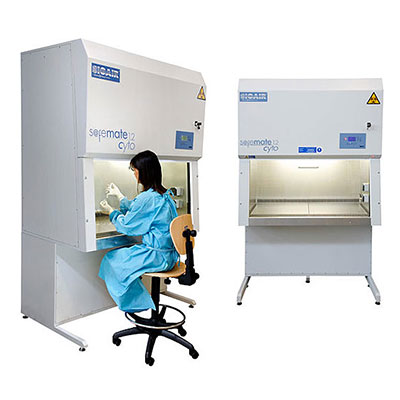






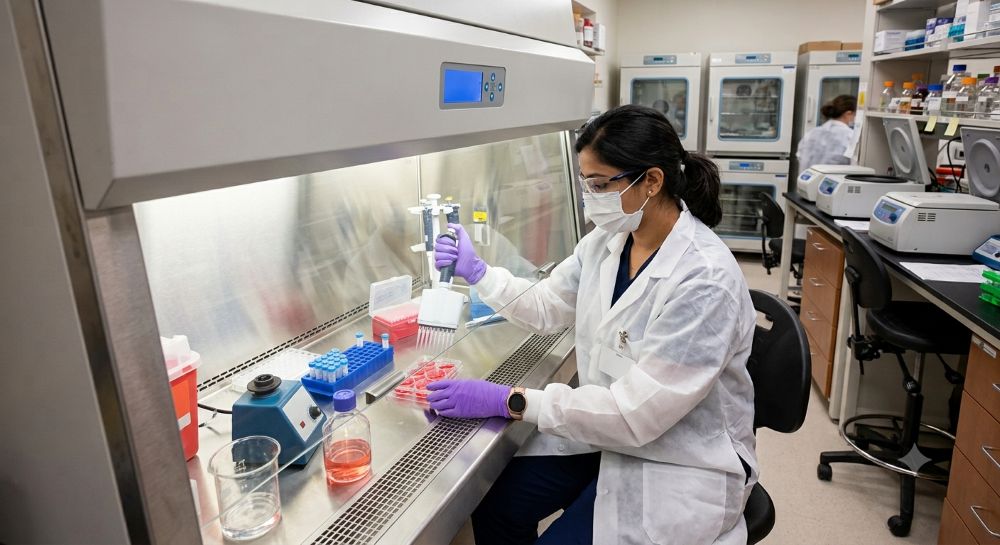
To prepare a biological safety cabinet for service, the contamination risk must be understood, cleared and documented. Service work may involve filter access, airflow testing, sash adjustment, repairs or internal inspection, so a routine surface wipe is not always enough. Biological safety cabinet decontamination protects the service team and helps prevent cross-contamination after the cabinet returns to use.
Preparation needs to match the cabinet, its use and the reason for service. A Class II cabinet used for routine microbiology presents a different handover risk from a cabinet used with higher-risk organisms, cytotoxic work or clinical samples. Before any BSC decontamination before maintenance, confirm the cabinet type, agents handled, recent spill history and internal SOP requirements.
Our bio-decontamination services can support cabinet, equipment and room decontamination where site conditions are suitable.
Start with the risk
A useful cabinet decontamination checklist starts with use history. Ask what has been handled in the cabinet since the last validated decontamination, not just when the next service is due. Record agents, sample types, disinfectants, residues, sharps risk, spills and filter alarms. If the cabinet has been moved, damaged or used outside its intended application, treat that as a change in risk.
The service provider also needs to know what work is planned. A visual inspection may carry a different exposure risk from filter replacement or internal repair. Match the decontamination method to the likely contact surfaces and service task.
Clear the work zone safely
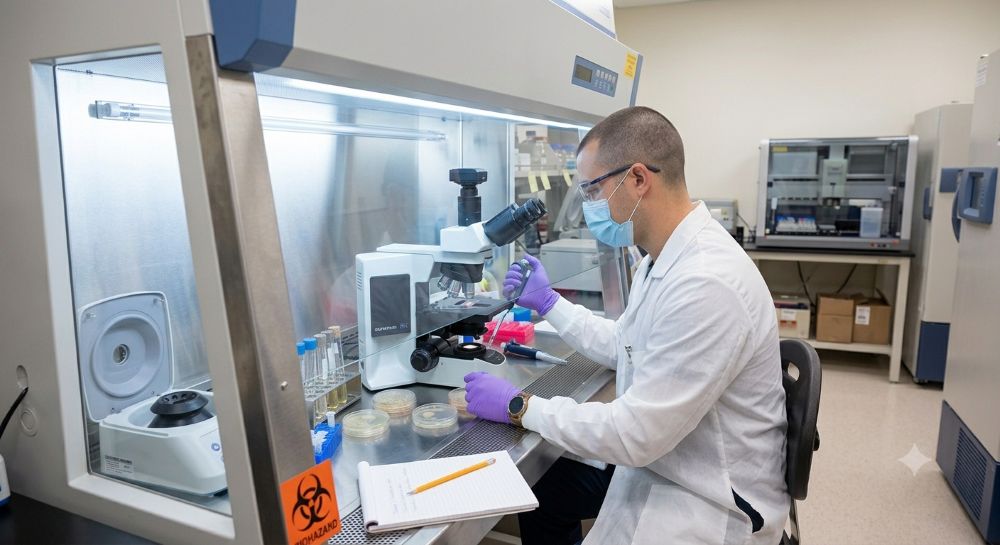
Remove samples, cultures, open containers, reagents, consumables and personal items before the technician arrives. Follow the facility’s containment and waste procedures. Do not move questionable material into another cabinet just to clear space unless the site procedure and risk assessment allow it.
Sharps, broken glass, contaminated pipette tips and absorbent materials need care. Dispose of them through the correct waste stream before decontamination, because they can shield contamination and create injury risk. If a spill occurred, record the material, cleaning method and any residue.
Leave the cabinet as empty as practical. Racks, trays, arm rests and small equipment can block vapour, disinfectant contact or technician access. Label any item that must remain in place.
Cleaning and decontamination differ
Pre-cleaning removes visible soil and residues. Decontamination reduces biological risk through a defined method. Both can matter. Organic material, dried media, chemical residue and clutter can reduce process effectiveness, so the cabinet should be visibly clean unless the service provider gives different instructions.
Do not spray unfamiliar chemicals into the cabinet or mix disinfectants to “boost” the result. Disinfectant choice depends on the agent, surface compatibility, contact time, cabinet materials and site procedures. Residues can damage stainless steel, seals, sensors or viewing panels. Note any residue-forming disinfectant in the handover record.
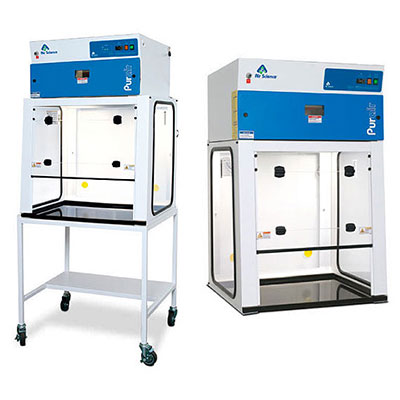
For laboratories comparing equipment types or planning upgrades, our biological safety cabinets range can help clarify cabinet classes and intended protection outcomes.
Prepare the room for access
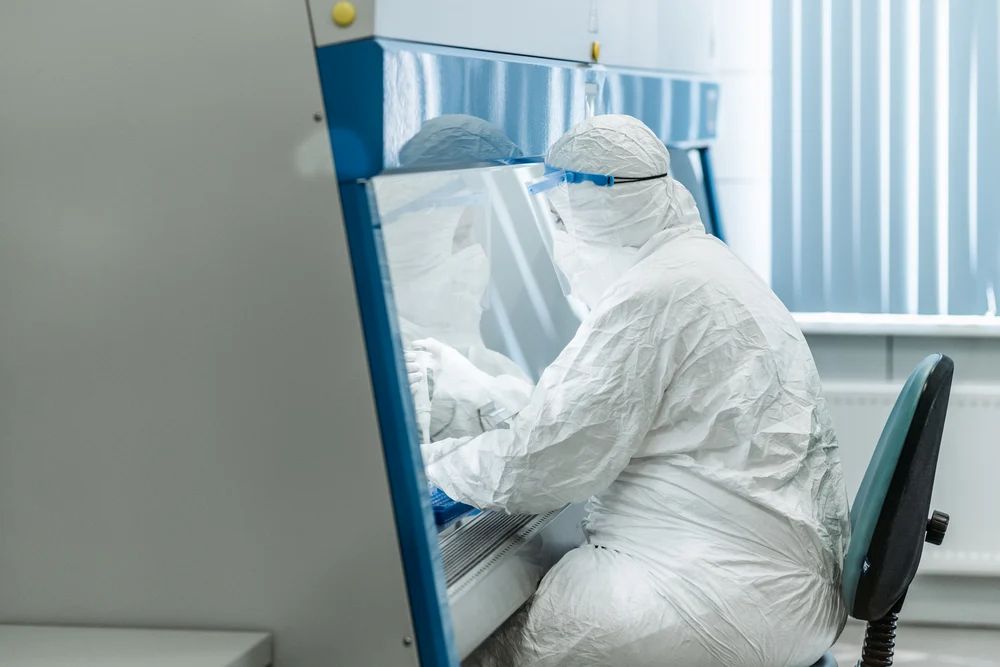
Good preparation includes the space around the cabinet. Clear benches, floors and nearby storage so the service team can position test equipment, decontamination equipment or access panels. Confirm safe access to power points, exhaust connections, waste pathways and linked services.
Do not remove filters, loosen panels, defeat alarms or change cabinet settings unless the service provider asks you to do so. Keep the cabinet connected to power if instructed. Some checks rely on the cabinet’s normal operating state.
Post a clear status label on the cabinet: in use, awaiting decontamination, decontaminated, out of service or ready for testing. Lock out or restrict use if your site procedure requires it.
| Preparation item | What to check before service |
| Cabinet identity | Class, model, location, asset number and service reason |
| Use history | Agents, sample types, spills, residues and recent alarms |
| Work zone | Samples, waste, sharps, racks and loose items removed |
| Access | Space, power, exhaust path and room entry available |
| Records | SOP requirements, decontamination status and handover notes ready |
Plan for testing after service
Decontamination does not prove cabinet performance. After service, a cabinet may still need testing, certification or other checks before it returns to routine use. The exact requirement depends on the cabinet class, service work, facility risk profile, manufacturer guidance, applicable standards and your quality system.
At LAFtech, we supply, service and support laboratory and controlled environment equipment across Australia. Our NATA-accredited testing services support cabinet performance checks where the work sits within the relevant accreditation scope.
For a wider view of cabinet classes, certification steps and selection factors, read our complete guide to biological safety cabinet testing, certification and selection in Australia.
Frequently Asked Questions
Can our lab disinfect the cabinet instead of booking decontamination?
Routine disinfection may suit normal work practices, but it may not be enough before tasks that expose internal or hard-to-reach areas. Decide using the risk assessment, SOPs and service scope.
Does UV exposure count as cabinet decontamination?
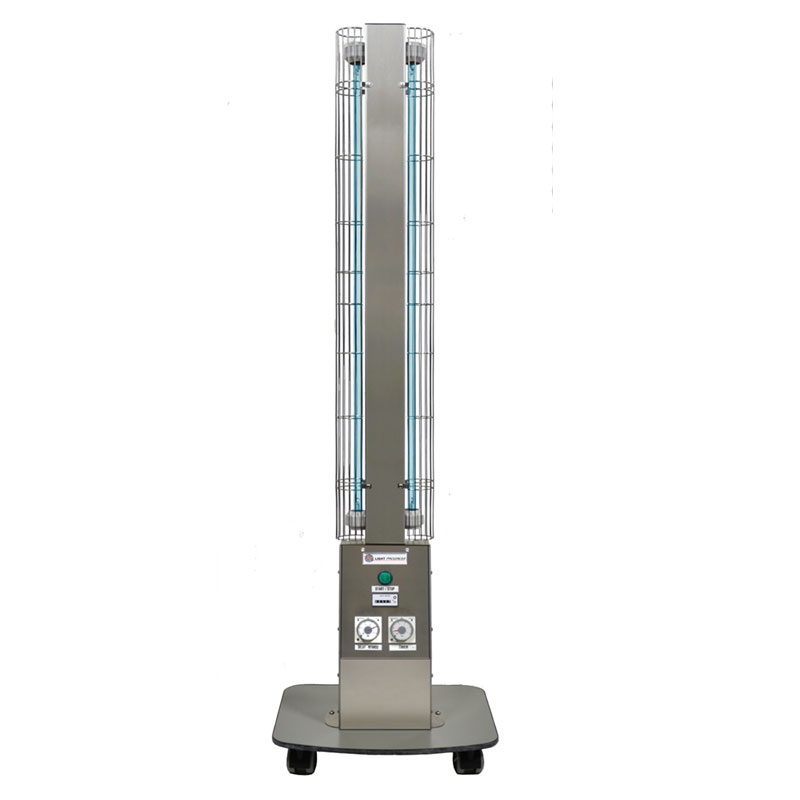
UV can support some surface control programmes, but it should not replace cleaning or a validated decontamination method. Shadowed areas, lamp age, surface soil and exposure time all affect performance.
Should the cabinet be tested after decontamination?
Testing is often required after service, relocation, filter work or repairs, but requirements vary. Confirm what applies before the cabinet returns to use, especially in regulated or biosecurity settings.
We can help match decontamination, servicing and testing to the cabinet’s use and risk profile. Explore our contamination control equipment or contact our team to discuss biological safety cabinet servicing Australia-wide.