














A cabinet with HEPA filtration is not automatically suitable for cytotoxic drug work. Cytotoxic drug cabinets and biological safety cabinets both use controlled airflow and HEPA filtration, but they are designed around different risks, test expectations and service requirements.
In Australian laboratories, healthcare facilities and GMP-related manufacturing spaces, choosing the wrong cabinet can create a WHS exposure issue, a documentation gap or an audit finding.
At LAFtech, we help laboratories match contamination control equipment to the work being performed. If you are choosing between cabinet types, start with the hazard and the protection target, not the cabinet name. Explore our cytotoxic cabinet range or explore our biological safety cabinet range.
The hazard is different, so the cabinet logic is different
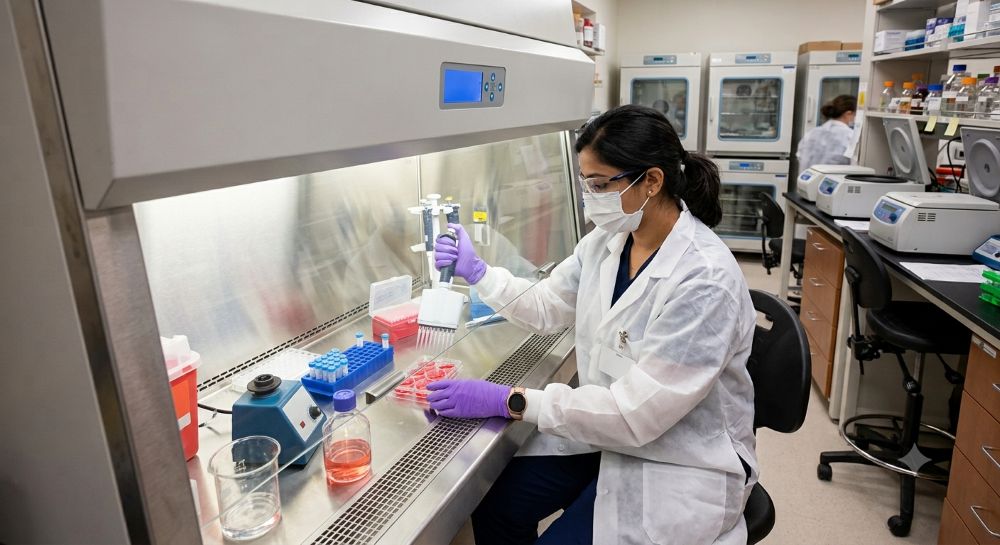
A biological safety cabinet, especially a Class II BSC, is primarily used for biological materials. Inward airflow, HEPA-filtered downflow and HEPA-filtered exhaust help protect personnel, the work and the surrounding environment. The exact protection profile depends on cabinet class, type, installation and facility procedure.
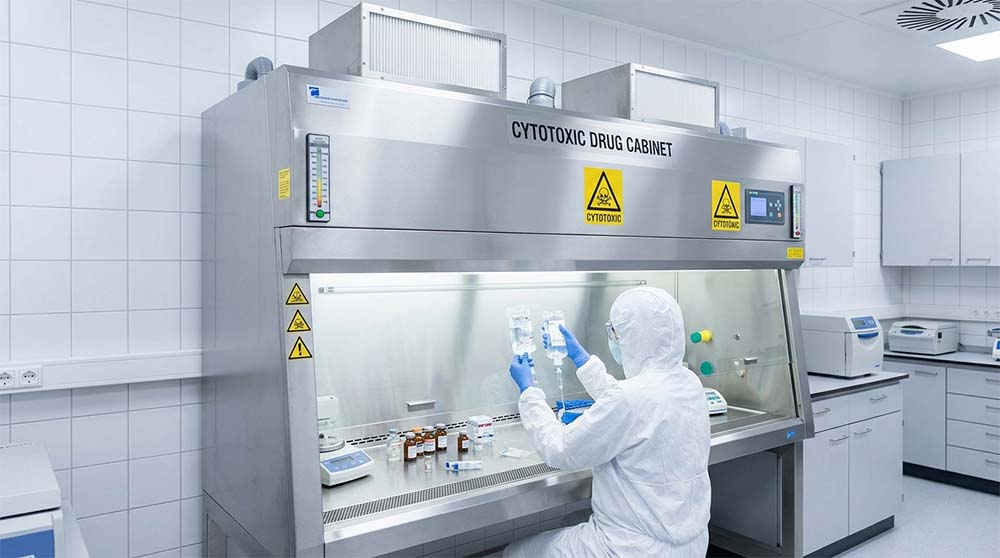
A cytotoxic drug safety cabinet is built for hazardous drug preparation and handling. Cytotoxic drugs are treated as hazardous chemicals in the workplace safety context and may create exposure risk through aerosols, powders, spills, contaminated packaging and waste. The cabinet must support aseptic work while also helping contain cytotoxic particulate contamination, including after the operator has finished.
The practical question is not “does it have HEPA?” It is “which contamination path is this equipment designed to control, and who needs protection?”
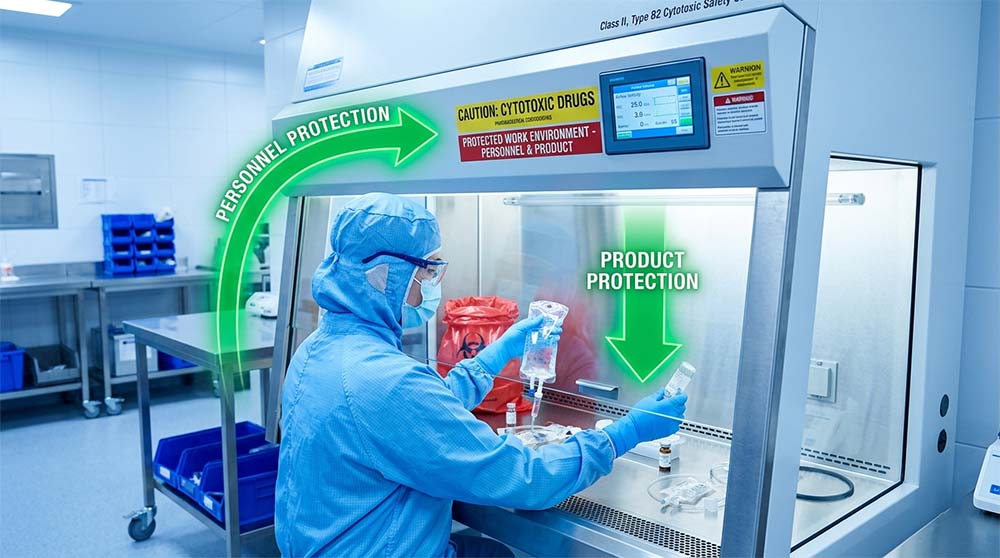
A cytotoxic cabinet also protects the people who service it
The easily missed issue is maintenance risk. In cytotoxic drug work, the hazard does not end when the sash closes. Drug residues can contaminate the work zone, filters, plenums and internal surfaces.
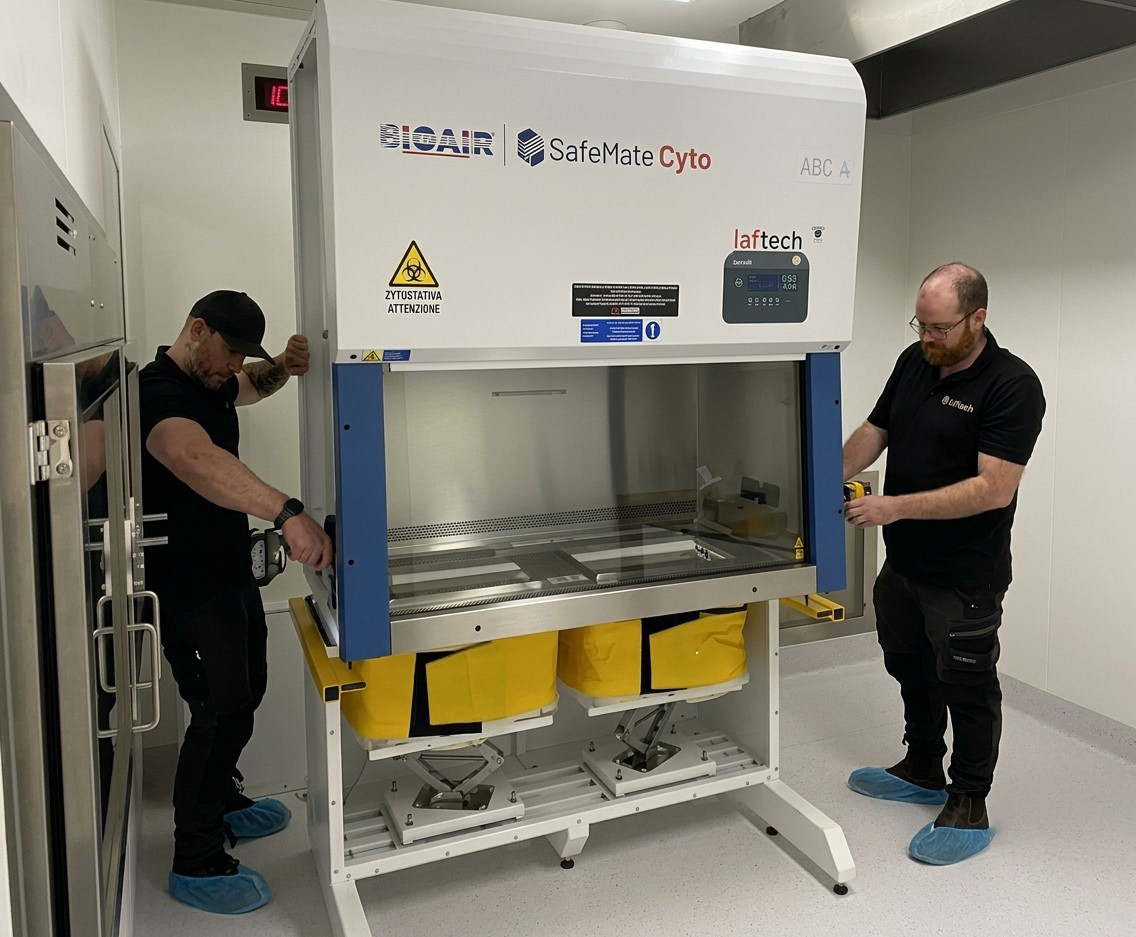
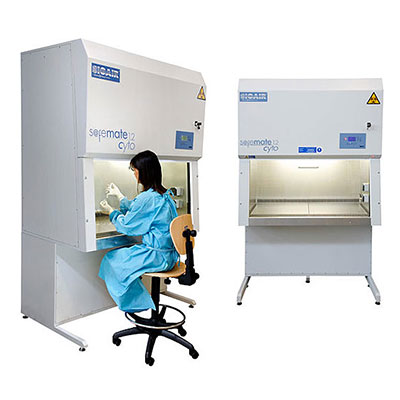
A cytotoxic cabinet such as the BioAir Safemate CYTO uses multiple H14 HEPA filtration stages and, on relevant configurations, service arrangements intended to reduce exposure during filter replacement.
A general Class II BSC may protect personnel and samples during biological work, but it should not be treated as a cytotoxic cabinet unless the exact model, standard, installation and intended use support that claim. The wrong choice can shift risk to cleaners, service engineers and waste handlers.
A quick comparison for procurement and QA
Decision point | Cytotoxic drug cabinet | Biological safety cabinet |
Primary use | Cytotoxic or hazardous drug handling | Biological materials and infectious aerosols |
Main concern | Operator, product, environment and service exposure | Operator, product and environment protection, depending on class |
Residue risk | Hazardous drug contamination can remain on filters and surfaces | Biological contamination may need validated decontamination |
Standard context | AS 2252.5 and manufacturer instructions are commonly relevant | The applicable/current AS 2252.2 edition, AS 2252.4, AS 1807:2021 or NSF/ANSI 49 may be relevant |
Testing and records need to match the cabinet type
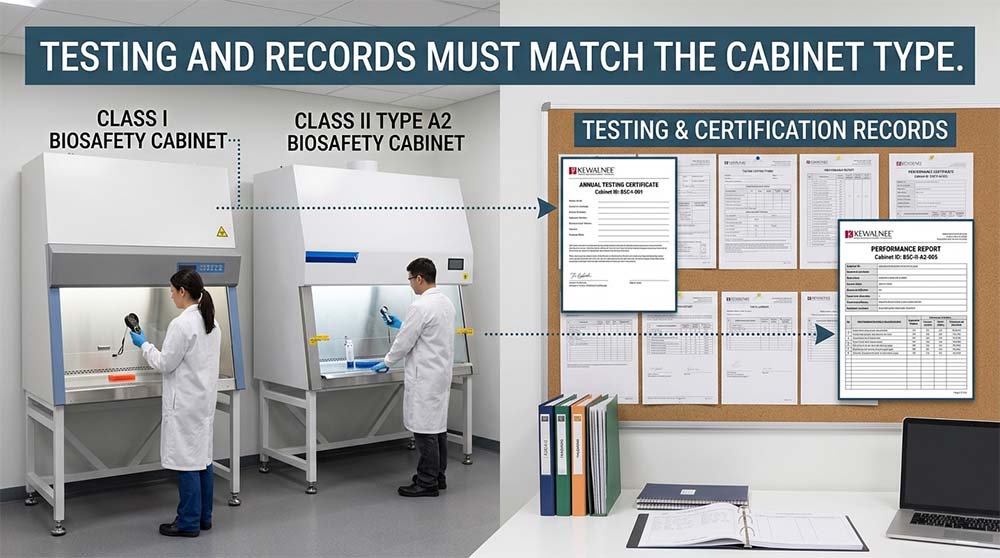
A pass label is only useful if the test method fits the equipment and its intended use. Relevant requirements may include the AS 2252 series, AS 1807:2021 test methods, NSF/ANSI 49 for some BSC field certification contexts, internal SOPs, GMP expectations where applicable, and manufacturer instructions.
For regulated or quality-sensitive sites, ask for the test scope, acceptance criteria, instrument calibration status, technician competence and report detail. NATA accreditation applies to defined scopes, not every activity a provider performs. View our NATA-accredited testing services and check our accreditation information to help align cabinet certification, airflow testing and documentation before an audit cycle or facility change.
Buying the cabinet is only one part of the evidence trail. Installation, operational qualification, routine testing, instrument calibration, service history and change control all affect how defensible the system is.
Start with the work, not the catalogue name
Before buying, reusing or relocating a cabinet, ask what will be handled, which protection target matters most, what standard or SOP applies, where the cabinet will sit, and how spills, decontamination, filter changes and waste will be managed.
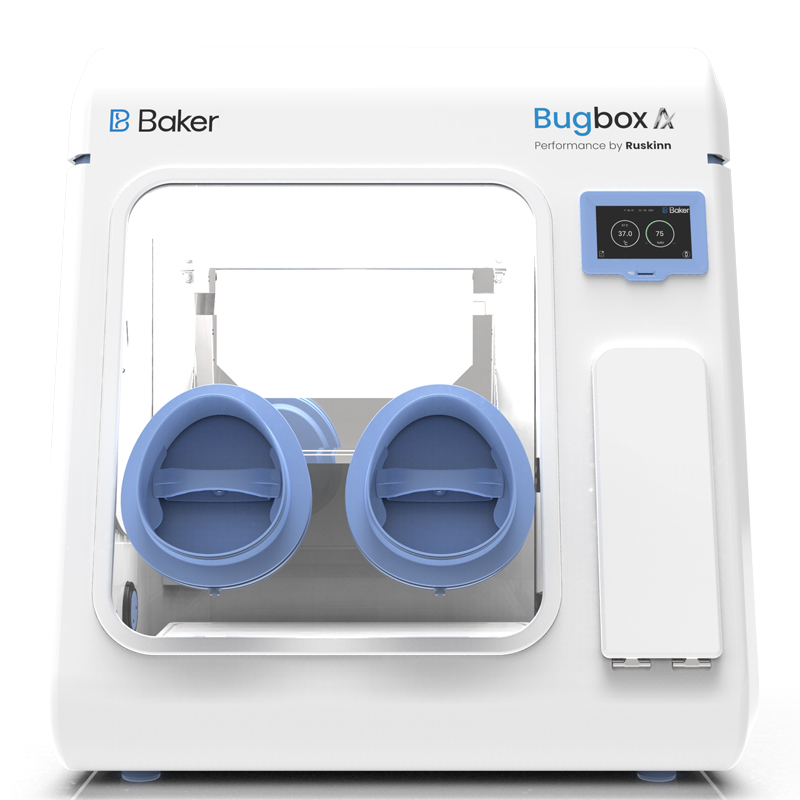
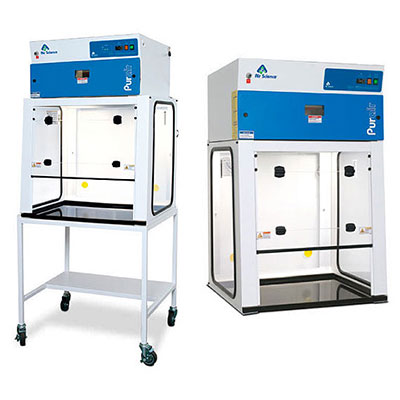
Also separate nearby equipment types. A laminar flow cabinet generally protects the product, not the operator. A fume cupboard manages chemical fumes and vapours but is not a biological containment device. An isolator may be the right answer for some higher-control processes, but it brings different qualification, transfer and maintenance questions.
For a deeper BSC-only decision path, read our complete BSC testing and selection guide.
FAQs
Can a Class II BSC be used for cytotoxic drugs?
Only if the cabinet, standard, installation, intended use and risk assessment support that application. Do not assume a Class II BSC is suitable because it has HEPA filtration and inward airflow.
Does a cytotoxic cabinet replace a BSC for microbiology?
Not automatically. Some cytotoxic cabinets may share features with microbiological safety cabinets, but microbiology work needs its own biosafety risk assessment, facility controls and test requirements.
How often should cabinets be tested?
The interval depends on the cabinet type, standard, manufacturer guidance, facility SOP, risk profile and events such as relocation, repair or filter change. Confirm the exact requirement against your quality system and applicable standard.
At LAFtech, we combine laboratory equipment supply with accredited testing, calibration, servicing and technical support, so clients can manage equipment performance and controlled environment risk through one experienced team. If you need help specifying, testing, servicing or replacing a cabinet, contact our team with the application, cabinet model if known, facility context, and testing or service requirements.